



Angiotensin-converting Enzyme (ACE)
Angiotensin-converting enzyme (ACE) indirectly increases blood pressure by causing blood vessels to constrict. ACE does that by converting angiotensin I to angiotensin II, which constricts the vessels. ACE, angiotensin I and angiotensin II are part of the renin-angiotensin system (RAS), which controls blood pressure by regulating the volume of fluids in the body. ACE is secreted in the lungs and kidneys by cells in the endothelium (inner layer) of blood vessels. It has two primary functions: ACE catalyses the conversion of angiotensin I to angiotensin II, a potent vasoconstrictor in a substrate concentration-dependent manner. ACE degrades bradykinin, a potent vasodilator, and other vasoactive peptides. These two actions make ACE inhibition a goal in the treatment of conditions such as high blood pressure, heart failure, diabetic nephropathy, and type 2 diabetes mellitus. Inhibition of ACE (by ACE inhibitors) results in the decreased formation of angiotensin II and decreased metabolism of bradykinin, leading to systematic dilation of the arteries and veins and a decrease in arterial blood pressure.
All Product Categories
-
Angiotensin-converting Enzyme (ACE) Inhibitors
(284)
View all products
-
Angiotensin-converting Enzyme (ACE) Antagonist
(1)
View all products
-
Angiotensin-converting Enzyme (ACE) Activators
(5)
View all products
-
Angiotensin-converting Enzyme (ACE) Modulator
(1)
View all products
-
Angiotensin-converting Enzyme (ACE) Chemical
(1)
View all products
-
Angiotensin-converting Enzyme (ACE) Control
(1)
View all products
-
Angiotensin-converting Enzyme (ACE) Substrates
(2)
View all products
-
ACE/CD143 Proteins
(1)
View all products
-
Angiotensin-Converting Enzyme 2 (ACE2) Proteins
(21)
View all products
-
Angiotensin-converting Enzyme (ACE) Related Products (341)
Related Products (341)

-
Recombinant Proteins (22)
-
Antibodies (3)

-
Moexiprilat
 0 ImagesCat. No.: HY-A0114CAS No.: 103775-14-0Synonyms: RS 10029Moexiprilat is an inhibitor of angiotensin-converting enzyme (ACE; IC50=2.1 nM) and an active metabolite of the prodrug Moexipril (HY-117281). It is formed from moexipril in vivo by side chain ester hydrolysis. Moexiprilat (10 nM) prevents the estrone- or angiotensin II-stimulated proliferation of primary neonatal rat cardiac fibroblasts. It reduces mean arterial blood pressure and increases the levels of atrial natriuretic peptide, a marker of hypertension, in ovariectomized mice when administered at a dose of 50 mg/kg per day.
-
(S)-Lisinopril-d5 sodium
 0 ImagesCat. No.: HY-18206S1CAS No.: 1356847-28-3Synonyms: MK-521-d5 sodium(S)-Lisinopril-d5 (sodium) (MK-521-d5 (sodium)) is deuterium labeled Lisinopril. Lisinopril (MK-521) is angiotensin-converting enzyme inhibitor, used in treatment of hypertension, congestive heart failure, and heart attacks.
-
I5B2
 0 ImagesCat. No.: HY-119195CAS No.: 93768-49-1I5B2 is an angiotensin I converting enzyme inhibitor (IC50=0.091 μM) that can be isolated from the culture medium of Actinomycete actininadura sp. No. 937ZE-1. I5B2 can be used in the study of hypertension.
-
Quinaprilat hydrochloride
 0 ImagesCat. No.: HY-127026BCAS No.: 82586-58-1Quinaprilat hydrochloride is an orally active non-mercapto Angiotensin Converting Enzyme (ACE) inhibitor, the active metabolite of Quinapril. Quinaprilat hydrochloride specifically blocks the conversion of angiotensin I to the vasoconstrictor angiotensin II and inhibits the degradation of bradykinin. Quinaprilat hydrochloride acts as anti-hypertensive agent and vasodilator.
-
MolPort-010-778-422
 0 ImagesCat. No.: HY-175475CAS No.: 1223950-00-2MolPort-010-778-422 is a high-affinity inhibitor targeting the ACE2 receptor of SARS-CoV-2 virus. MolPort-010-778-422 demonstrates excellent antiviral activity (IC50=8.9 nM). MolPort-010-778-422 is promising for research of SARS-CoV-2.
-
CGS 35601
 0 ImagesCat. No.: HY-18211CAS No.: 849066-09-7CGS 35601 is the inhibitor for endothelin-converting enzyme-1 (ECE-1), neutral endopeptidase 24.11 (NEP), and angiotensin-converting enzyme (ACE), with IC50s of 55, 2, and 22 nM, respectively. CGS 35601 suppresses the big endothelin-1 (big ET-1)- and angiotensin I-induced pressor response, and enhances circulation of atrial natriuretic peptide (ANP), regulates the cardiovascular function in SD rats.
-
Bisoxatin (Standard)
 0 ImagesCat. No.: HY-121068RCAS No.: 17692-24-9Bisoxatin (Standard) is the analytical standard of Bisoxatin. This product is intended for research and analytical applications. Bisoxatin is a laxative drug used for constipation. Bisoxatin binds substantially at the S-protein-ACE2 interface. Bisoxatin has the potential for inhibiting SARS-CoV-2 entry into the host research.
-
HD5
 0 ImagesCat. No.: HY-P5407CAS No.: 798569-33-2HD5 is an innate immune effector peptide and SARS-CoV Inhibitor. HD5 binds to the ligand-binding domain of angiotensin-converting enzyme-2 (ACE2) via multiple hydrogen bonds to competitively block the receptor, shielding it from viral recognition. HD5 can be used for the research of COVID-19, HPV16 infection, epithelial ovarian cancer, small-cell lung cancer, and colon cancer.
-
Quinapril hydrochloride (Standard)
 0 ImagesSynonyms: CI-906 (Standard)Quinapril (hydrochloride) (Standard) is the analytical standard of Quinapril (hydrochloride). This product is intended for research and analytical applications. Quinapril (hydrochloride) (CI-906) is a proagent that belongs to the angiotensin-converting enzyme (ACE) inhibitor class of medications.
-
Lisinopril dihydrate (Standard)
 0 ImagesSynonyms: MK-521 dihydrate (Standard)Lisinopril (dihydrate) (Standard) is the analytical standard of Lisinopril (dihydrate). This product is intended for research and analytical applications. Lisinopri dihydrate (MK-521 dihydrate) is angiotensin-converting enzyme inhibitor, used in treatment of hypertension, congestive heart failure, and heart attacks.
-
Quinaprilat (Standard)
 0 ImagesCat. No.: HY-127026RCAS No.: 82768-85-2Quinaprilat (Standard) is the analytical standard of Quinaprilat (HY-127026) . This product is intended for research and analytical applications. Quinaprilat is an orally active non-mercapto Angiotensin Converting Enzyme (ACE) inhibitor, the active metabolite of Quinapril. Quinaprilat specifically blocks the conversion of angiotensin I to the vasoconstrictor angiotensin II and inhibits the degradation of bradykinin. Quinaprilat acts as anti-hypertensive agent and vasodilator.
-
(R,R)-Benazepril
 0 ImagesCat. No.: HY-W742083CAS No.: 131064-75-0(R,R)-Benazepril is the R configuration of Benazepril (HY-B0093). Benazepril (CGS14824A free base) is an orally active angiotensin-converting enzyme (ACE) inhibitor that reduces the production of angiotensin II. Benazepril inhibits oxidative stress and suppresses apoptosis through the PI3K/Akt signaling pathway. Benazepril effectively ameliorates diabetic nephropathy and reduces proteinuria. Benazepril is used in the study of hypertension, heart failure, and diabetic nephropathy.
-
SQ 27786
 0 ImagesCat. No.: HY-123227CAS No.: 89813-31-0SQ 27786 is an angiotensin converting enzyme (ACE) inhibitor and a diuretic agent. SQ 27786 can be utilized in cardiovascular disease research.

-
Pentoprilat
 0 ImagesCat. No.: HY-187791CAS No.: 82950-75-2Synonyms: CGS 13934Pentoprilat (CGS 13934) is an orally active angiotensin-converting enzyme (ACE) inhibitor and is the active metabolite of Pentopril (HY-187790). Pentoprilat acts as a substrate for renal tubular secretion. Pentoprilat is rapidly excreted in urine via the kidneys in its unchanged form. Pentoprilat can be used in related studies on hypertension and congestive heart failure.
-
Imidapril-d3 (hydrochloride)
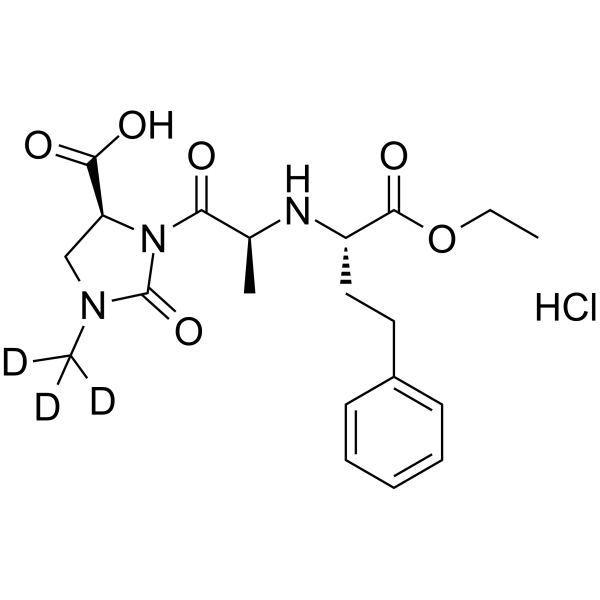 0 ImagesCat. No.: HY-B1451SCAS No.: 1356017-30-5Imidapril-d3 hydrochloride (TA-6366-d3) is the deuterium labeled Imidapril hydrochloride. Imidapril hydrochloride (TA-6366) is an orally active dual inhibitor of angiotensin-converting enzyme (ACE) and MMP-9. Imidapril hydrochloride inhibits lipopolysaccharide-induced phosphorylation of c-Jun, MKK4 and JNK in monocytes, and downregulates the production of specific inflammatory factors such as TNF-α and IP-10, thereby exerting anti-inflammatory activity. Imidapril hydrochloride also effectively ameliorates mesangial expansion and reduces urinary albumin excretion by inhibiting angiotensin AngII production, lowering glomerular pressure and oxidative stress, thus delaying disease progression. Imidapril hydrochloride can also directly bind to the active site of MMP-9 to inhibit gelatinase activity, and suppress the enlargement of cerebral aneurysms without altering systemic blood pressure. Imidapril hydrochloride is widely applicable to related studies on autoimmune glomerulonephritis, diabetic nephropathy, cerebral aneurysms and other conditions.

-
Benazepril (Standard)
 0 ImagesSynonyms: CGS14824A free base (Standard)Benazepril (Standard) is the analytical standard of Benazepril. This product is intended for research and analytical applications. 0
-
Perindopril-d5
 0 ImagesCat. No.: HY-B0130S1Synonyms: S-9490-d5Perindopril-d5 (S-9490-d5) is deuterium labeled Perindopril. Perindopril (S-9490) is an orally available, long-acting angiotensin-converting enzyme (ACE) inhibitor. Perindopril inhibits inflammatory cell influx and intimal thickening, preserving elastin on the inside of the aorta. Perindopril effectively inhibits experimental abdominal aortic aneurysm (AAA) formation in a rat model and reduces pulmonary vasoconstriction in rats with pulmonary hypertension.




